
Your VNA Calibration Lasts Until You Move the Cable.
Every time a standard test cable flexes, it introduces phase error. The 8 Series guarantees a maximum of ±4.5° at 50 GHz — through 40,000 flex cycles. When the cable stops mattering, the measurement can begin. Available in Israel through Koto Electronics.
The Moment You Touch the Cable, the Calibration is Conditional
VNA calibration removes systematic errors — but only for the state of the cable at the time of calibration. Every subsequent flex changes that state. If the cable contributes phase error that the VNA can't distinguish from the device, you are measuring the cable.
Calibration Walking
You calibrate the VNA, then flex the cable 30 times reaching different DUT orientations. Each flex shifts the cable's phase — the calibration correction terms are now wrong. The S-parameter you're recording is partially the calibration drift.
Phase Drift You Can't See
Standard test cables specify phase in a static position — which is not how you use them. The number that matters is phase stability in flexure. Without that spec, you have no way to bound the error your cable introduces during a real measurement session.
Port Connector Wear
The VNA port connector is disconnected and reconnected on every DUT. Standard connectors wear, lose repeatability, and eventually introduce connection uncertainty that is impossible to separate from measurement noise. A ruggedized port-side interface changes the failure mode.
A Cable That Is Invisible to the Measurement
The 8 Series is designed around a single principle: a VNA test cable should contribute nothing to the measurement result. Phase stability, amplitude stability, and mechanical durability are all specified for flexure — not static position.
- ✓±4.5° Max Phase Stability at 50 GHz — In FlexureNot typical. Not static. The maximum phase change during a 180° bend on a 57 mm mandrel is ±4.5° at 50 GHz. The measured traces (before, during, and after the bend) hold well within that envelope — you have a hard upper bound on your cable-induced phase error.
- ✓±0.08 dB Amplitude Stability — Through the Same FlexInsertion loss variation during flexure is bounded at ±0.08 dB at 50 GHz for the 635 mm assembly. For amplitude-sensitive measurements like filter insertion loss or gain compression, this gives you a defined, documentable uncertainty floor for the cable contribution.
- ✓40,000+ Flex Cycles — Tested, Not EstimatedJunkosha's durability testing exceeds 40,000 tick-tock cycles — a full 180° bend and return — with no degradation in performance. That represents years of daily laboratory use. The cable outlasts the measurement program, not the other way around.
- ✓180° Bend on 57 mm Mandrel — No Spring-BackThe cable bends fully and returns without spring-back. This means it doesn't fight you when reaching an awkward DUT position, and doesn't exert residual tension on the VNA port after you stop handling it.
- ✓NMD Ruggedized Connector — Port-Side ReliabilityThe ruggedized NMD connector on the VNA port side is designed for repeated connection cycles without degrading repeatability. Where a standard connector's mating performance drifts over hundreds of insertions, the NMD interface maintains consistent electrical contact.
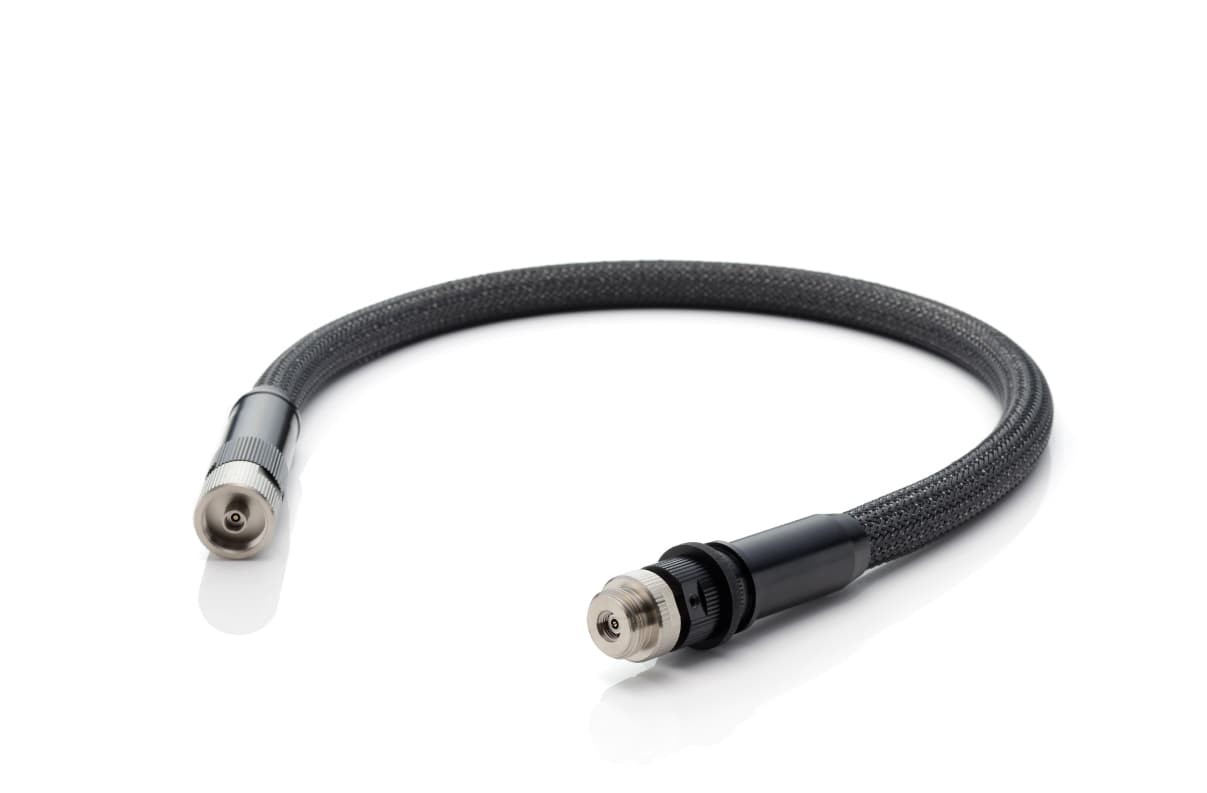
Junkosha MWX8 Series — VNA Test Cable Assembly
Phase Stability — MWX851 at 50 GHz
Typical measured result: Before / During / After 180° flex on 114 mm mandrel
Before, during, and after the flex test, the cable's phase trace holds well within the ±4.5° specification limit. The cable's contribution to your measurement error is bounded and documentable.
Applications
- VNA Port Extension
S-parameter measurements where cable movement is unavoidable
- Component Characterization
Filter, amplifier, and passive component measurement
- Antenna & Feed Testing
Swept-frequency measurements requiring cable flexure
- Calibration Verification
Stable baseline reference for calibration audits
Two Variants. One Standard.
Both variants share the same 14.2 mm OD cable, NMD port-side connector, and 57 mm minimum bend radius. Choose by maximum operating frequency.
26.5 GHz — VSWR 1.29:1, ±3.9° max phase stability in flexure
50 GHz mmWave — ±4.5° max phase stability, >40,000 flex cycles
Full Specification Comparison
All stability values measured in flexure. 50 Ω impedance. Operating temperature 23 ±5 °C.
| Model | Length | Max Freq. | Phase Stability | Amplitude Stability | Ins. Loss (typ.) | Ins. Loss (max) | VSWR | OD | Mass |
|---|---|---|---|---|---|---|---|---|---|
| MWX821 | 635 mm (25") | 26.5 GHz | ±3.9° | ±0.08 dB | 1.75 dB | 2.1 dB | 1.29:1 | 14.2 mm | 240 g/m |
| MWX821 | 965 mm (38") | 26.5 GHz | ±7.1° | ±0.15 dB | 2.45 dB | 2.8 dB | 1.29:1 | 14.2 mm | 240 g/m |
| MWX851 | 635 mm (25") | 50.0 GHz | ±4.5° | ±0.08 dB | 3.6 dB | 4.5 dB | 1.43:1 | 14.2 mm | 200 g/m |
| MWX851 | 965 mm (38") | 50.0 GHz | ±9.0° | ±0.15 dB | 5.1 dB | 6.2 dB | 1.43:1 | 14.2 mm | 200 g/m |
Shielding effectiveness >90 dB to 18 GHz. Velocity of propagation 79%.
Connector Options
NMD (ruggedized) connectors are used on the VNA port side. Standard precision connectors on the DUT side.
MWX821 — 26.5 GHz Connectors
NMD ruggedized and standard 3.5 mm options
- DFDNMD 3.5 mm (f) — ruggedized, for VNA port side
- DMDNMD 3.5 mm (m) — ruggedized, for VNA port side
- DFS3.5 mm (f) Straight — standard, DUT side
MWX851 — 50.0 GHz Connectors
NMD ruggedized and standard 2.4 mm options
- LFDNMD 2.4 mm (f) — ruggedized, for VNA port side
- LMDNMD 2.4 mm (m) — ruggedized, for VNA port side
- LFS2.4 mm (f) Straight — standard, DUT side
Frequently Asked Questions
What is 'phase stability in flexure' and why does it matter for VNA measurements?
What is an NMD connector and why is it specified for the port side?
Why does phase stability worsen with the 965 mm length?
The spec says ±4.5° at 50 GHz. Is that typical or maximum?
How many flex cycles can the cable withstand?
Which variant should I specify — MWX821 or MWX851?
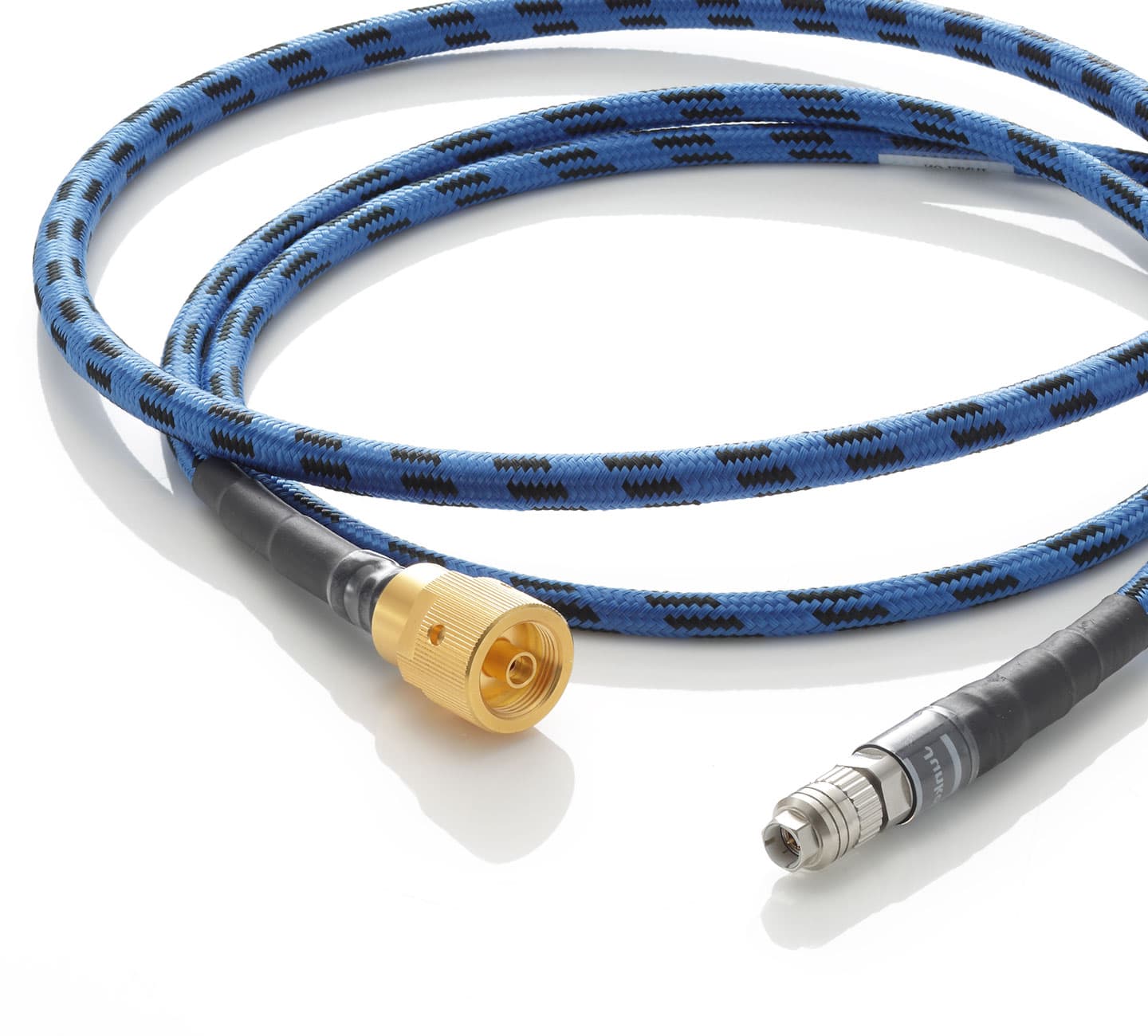
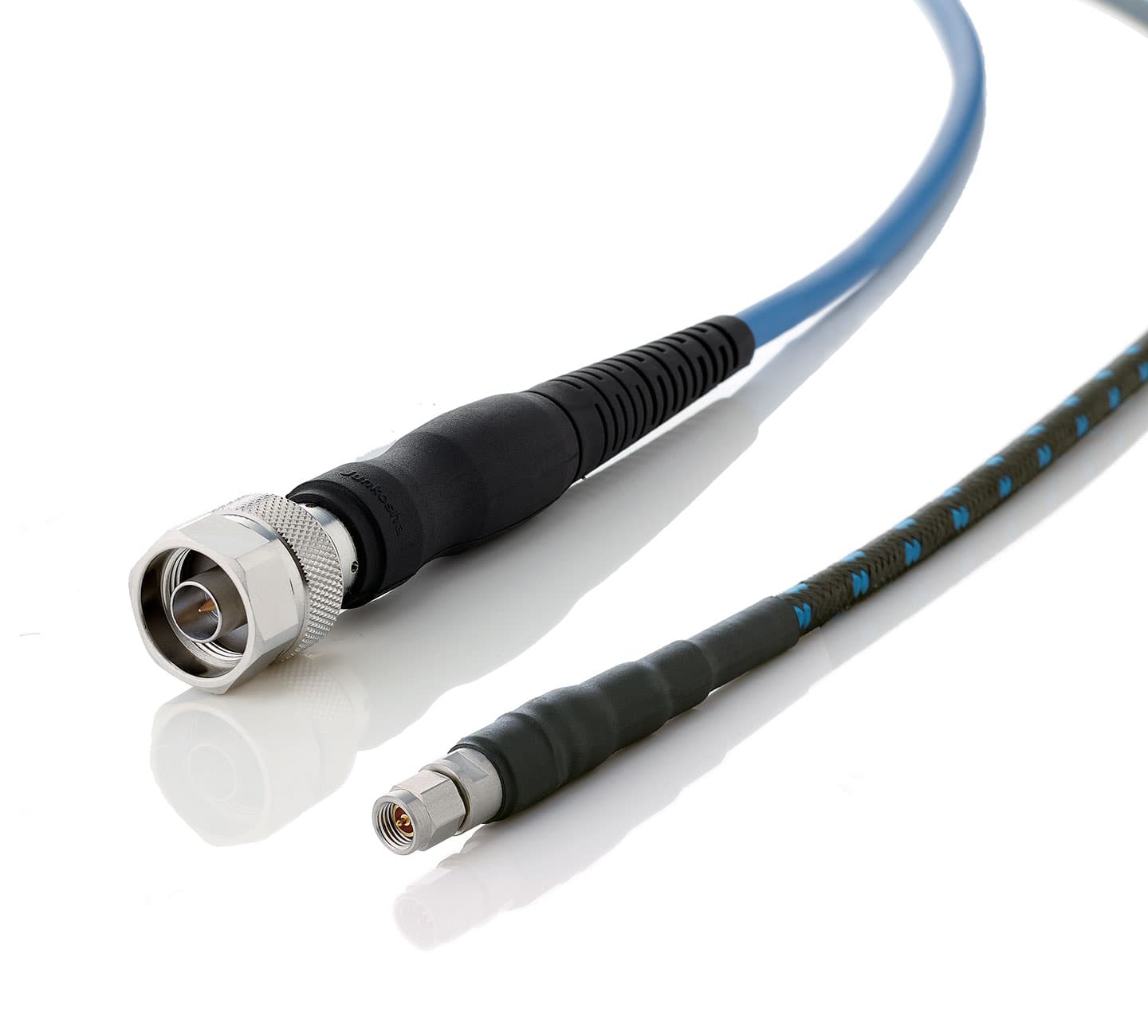
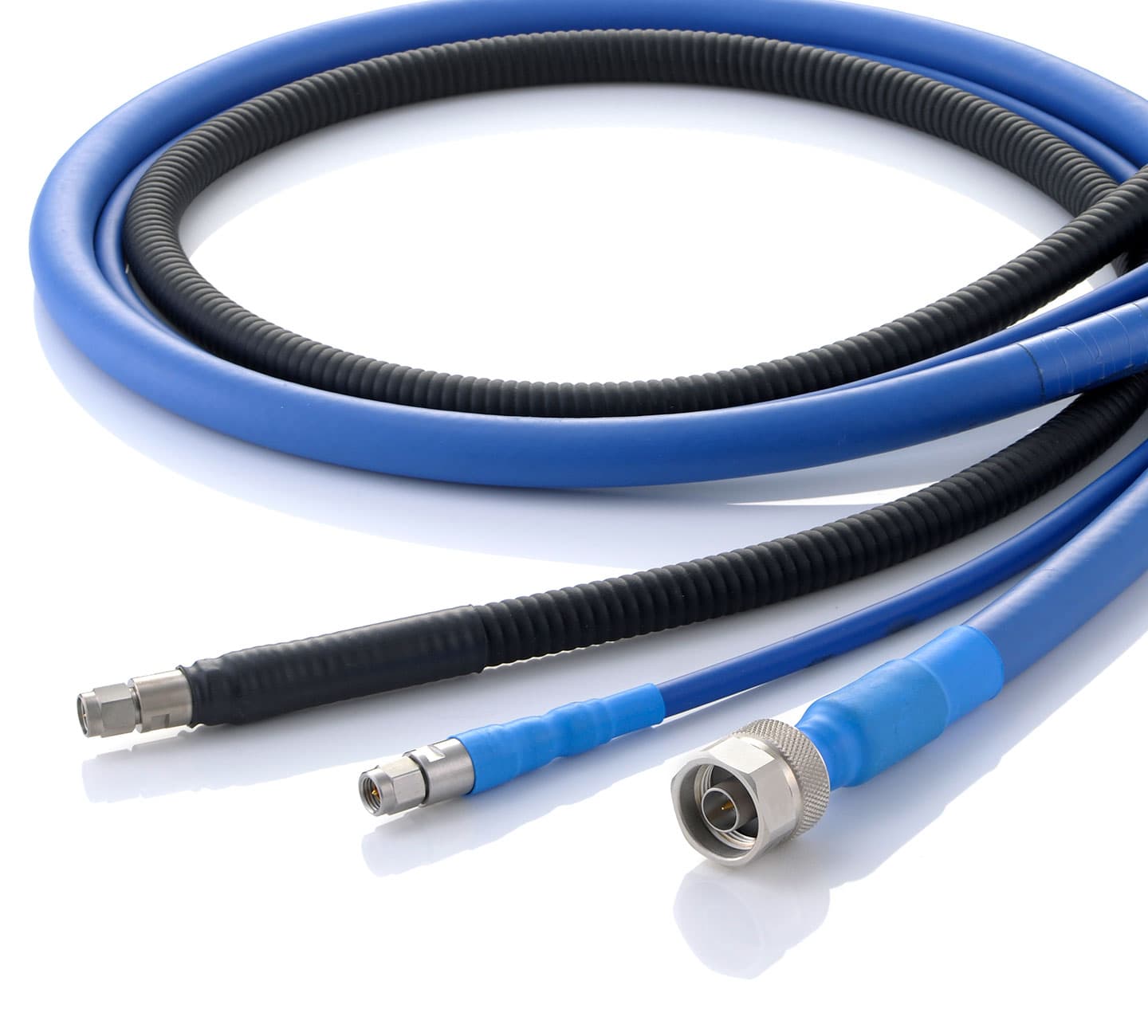
The MWX Series Family
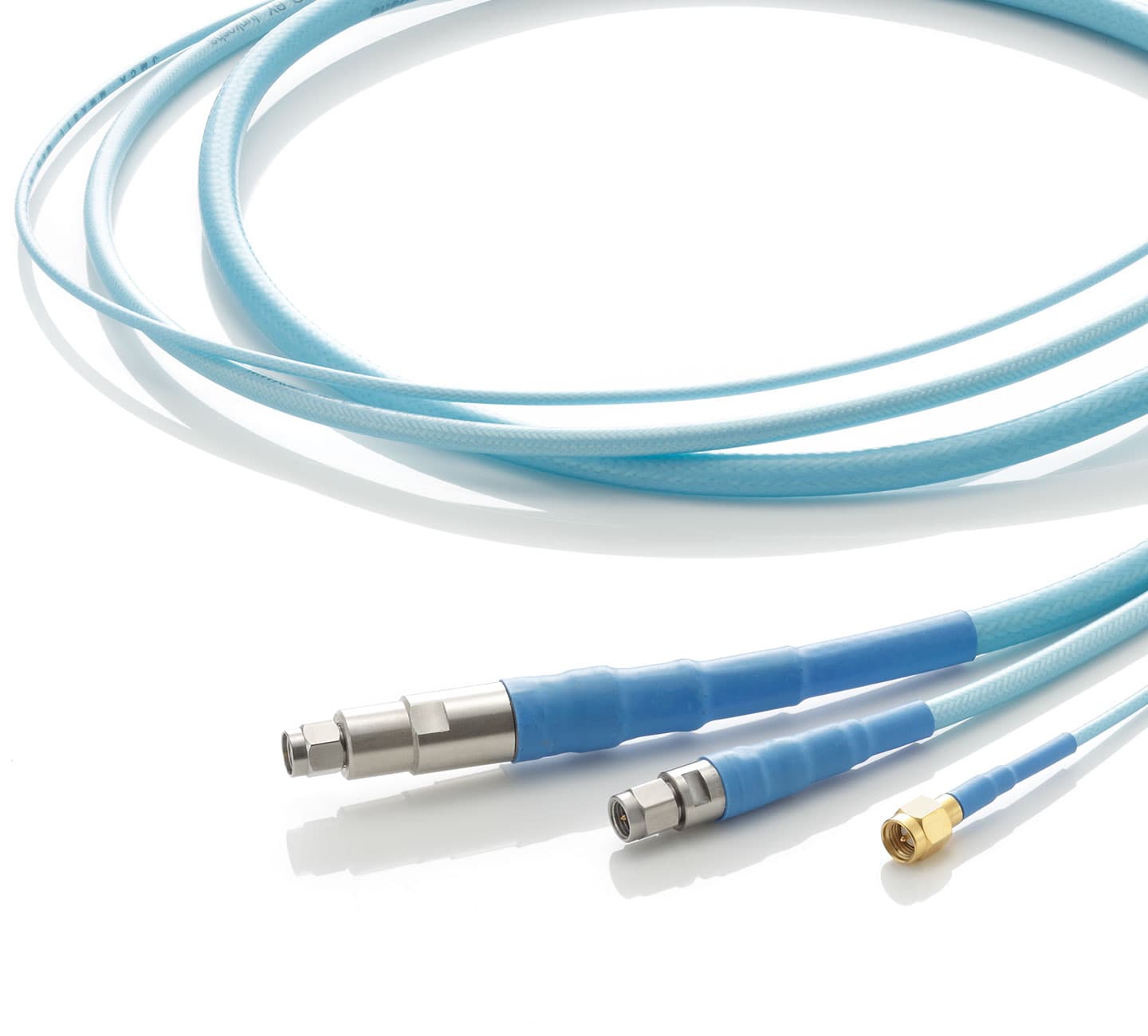
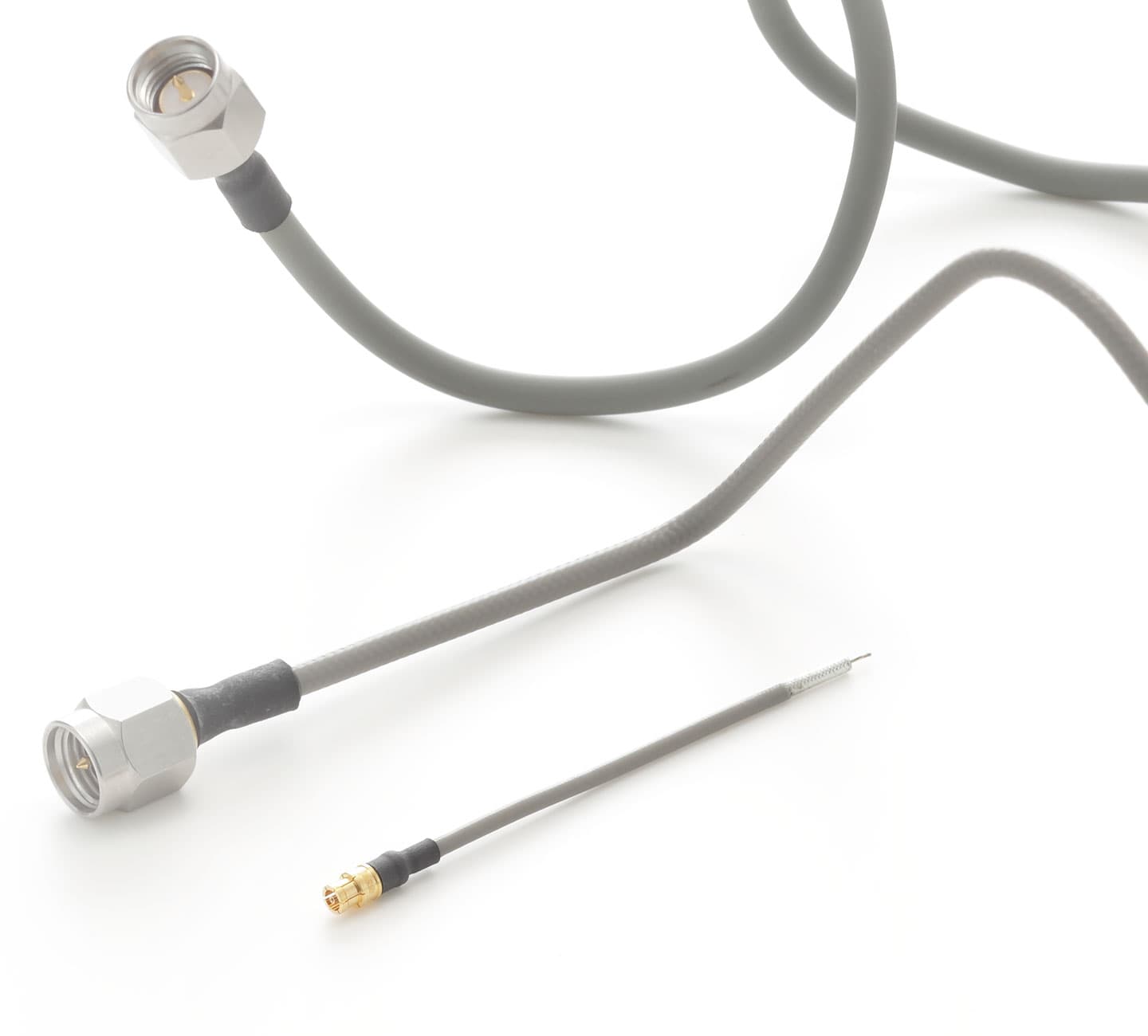
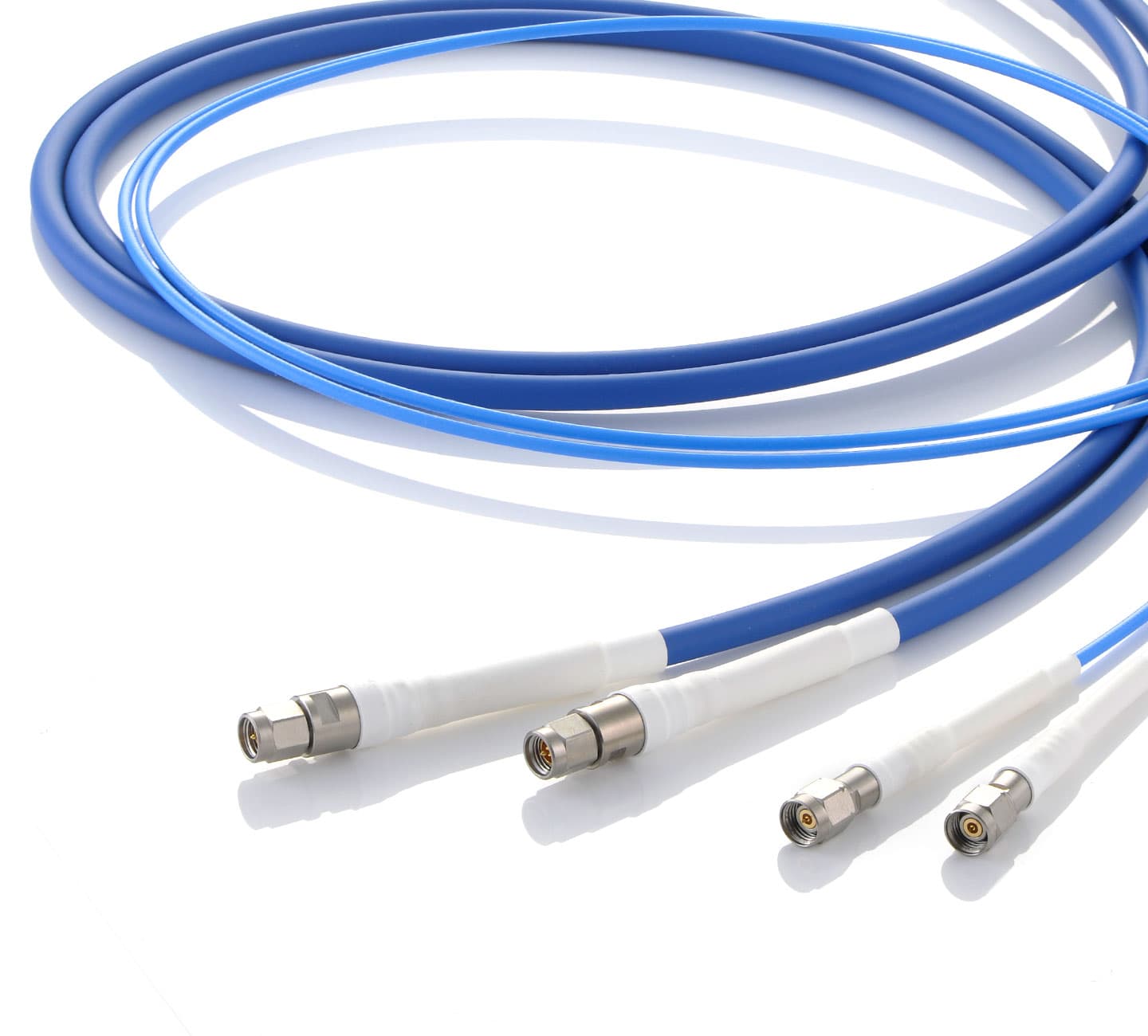
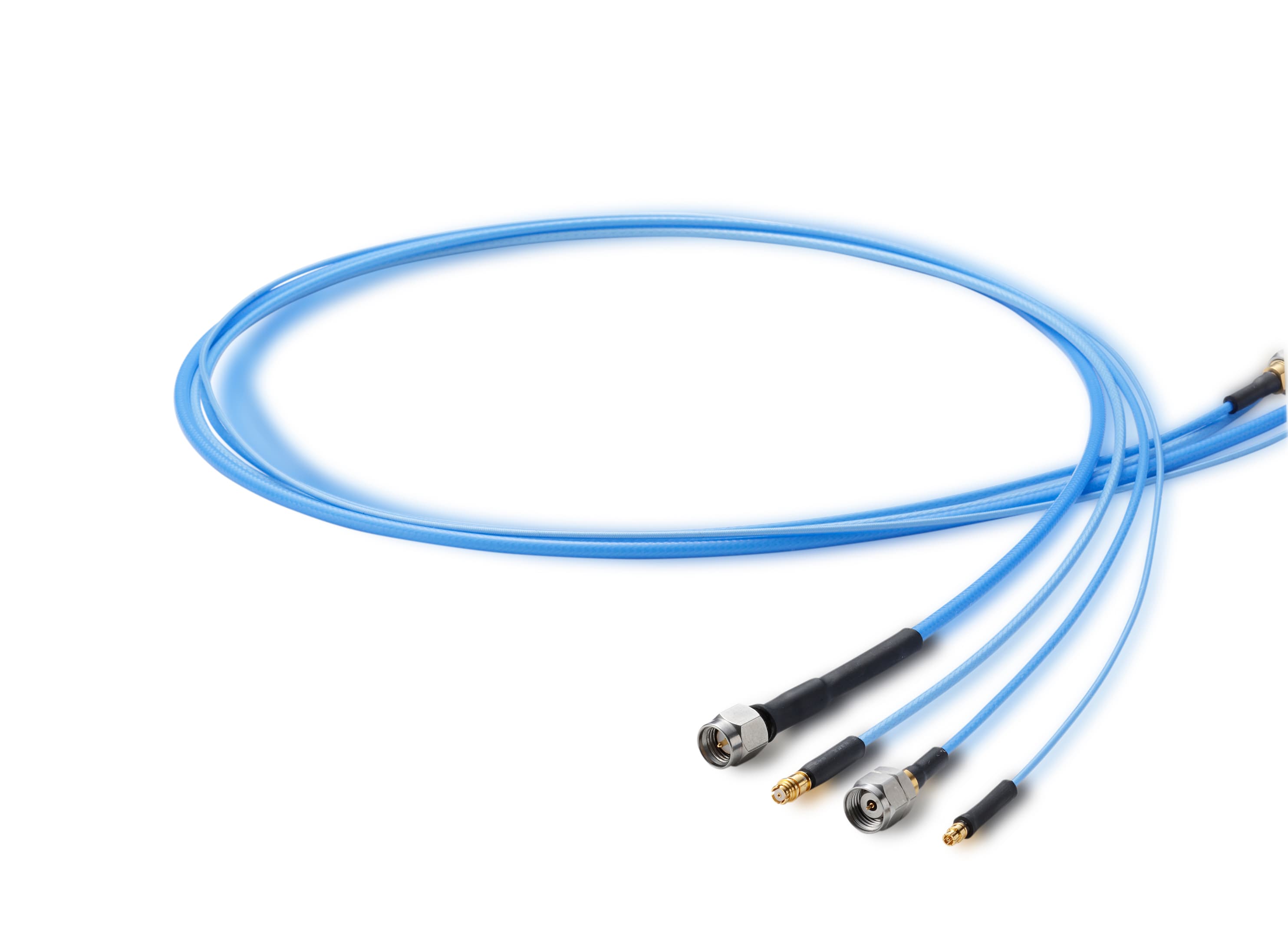
The full MWX product family covers RF and microwave cable assemblies for every test and measurement application.
Stop Working Around Cable Uncertainty
When the cable's phase error is bounded to ±4.5° and its durability is proven to 40,000 cycles, it stops being a variable in your measurement. Specify it once. Then focus on the device.