
Semi-Rigid Performance. No Tools. No Solder.
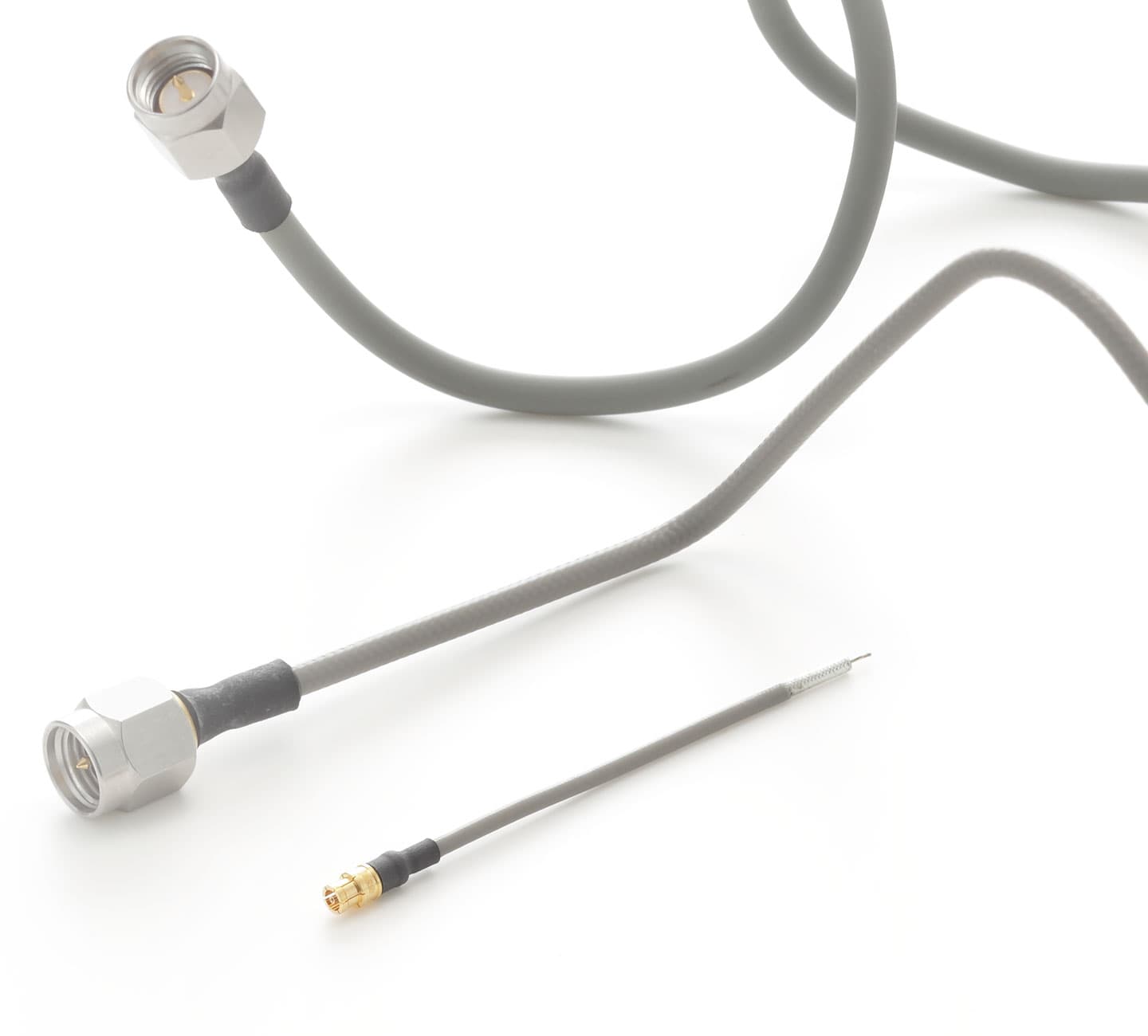
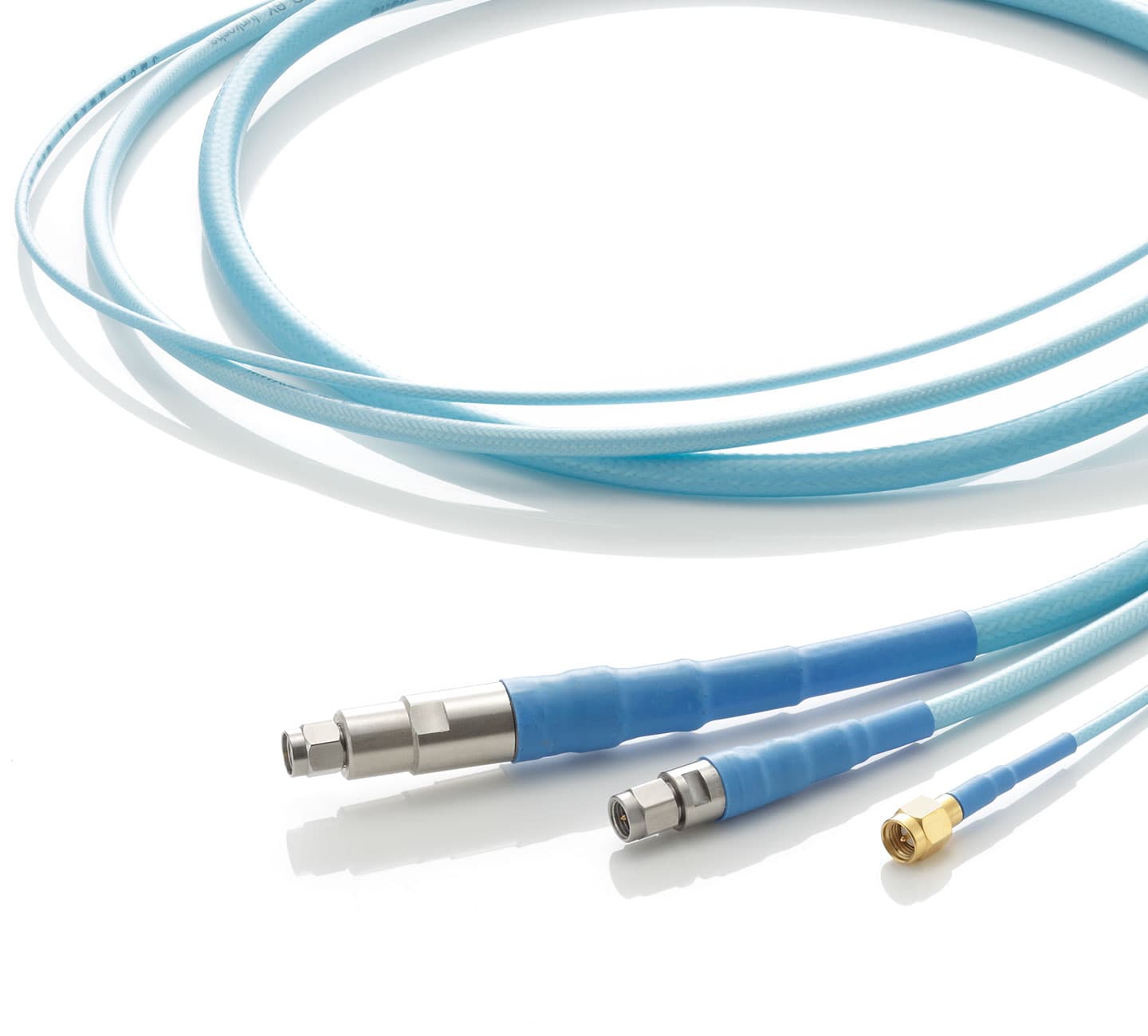
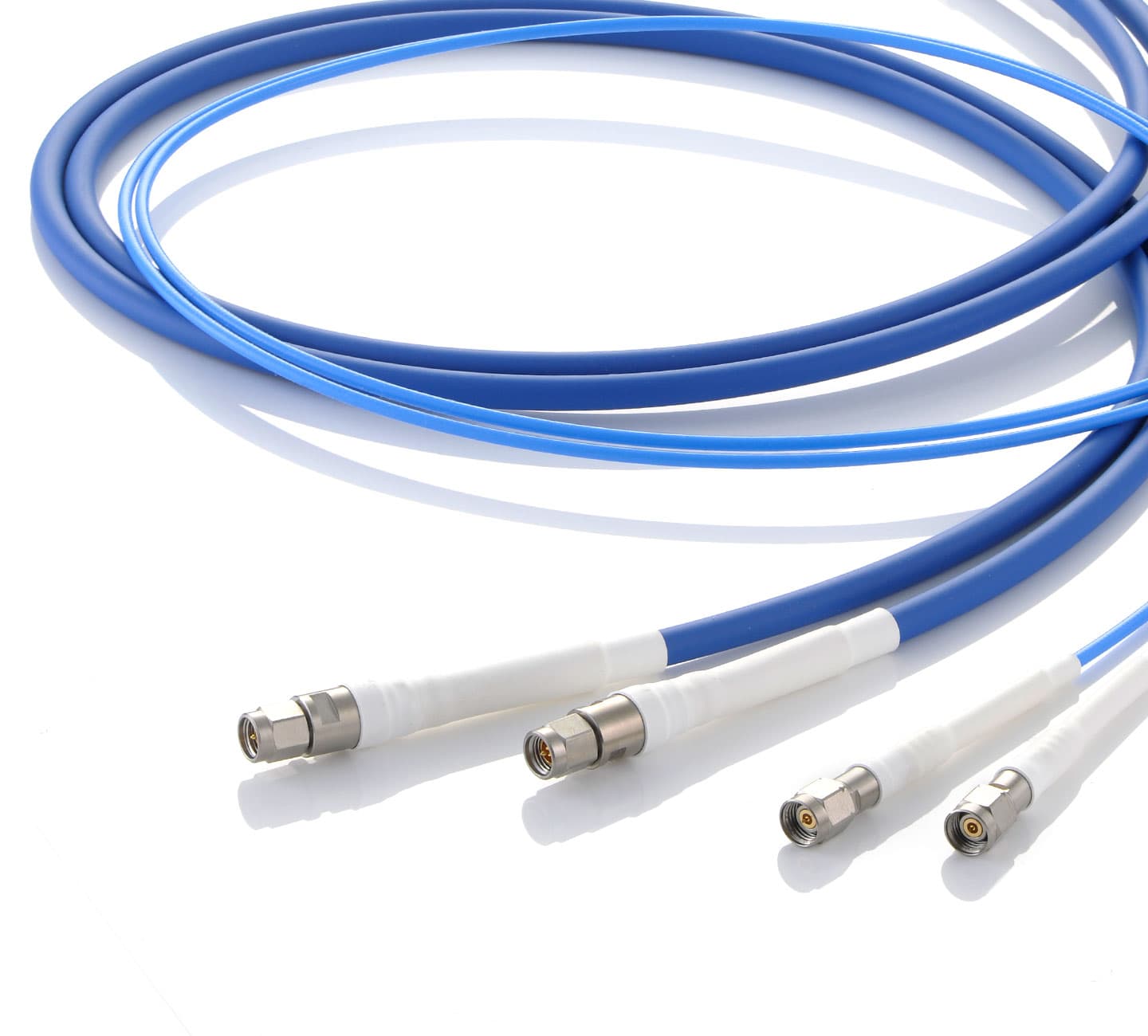
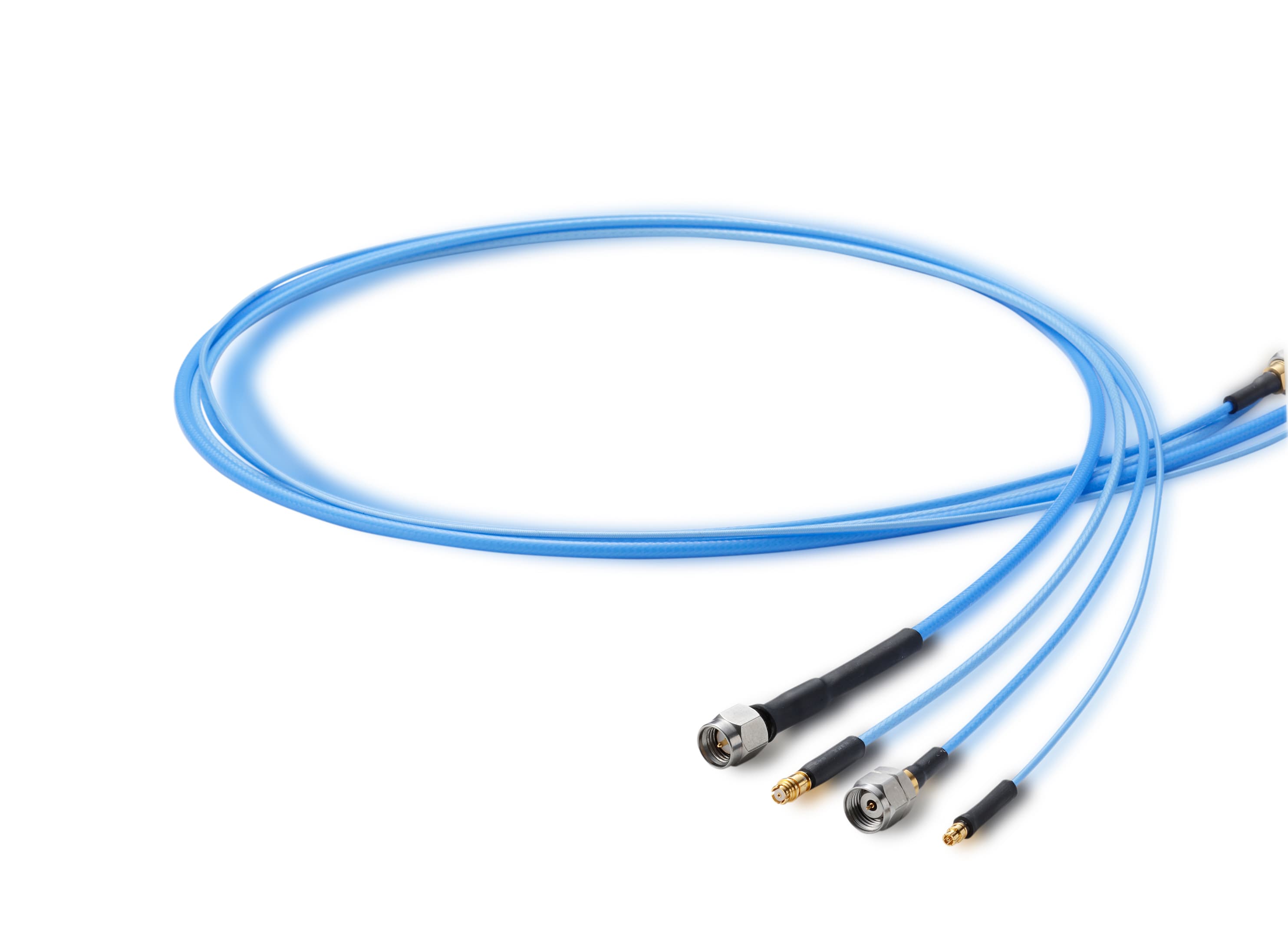
The Junkosha MWX4 & 5 Series are formable cable assemblies — bend them by hand, they hold their shape. Better insertion loss than equivalent semi-rigid cables, factory-connectorized, up to 100 GHz. Available in Israel through Koto Electronics.
Semi-Rigid or Flexible — You've Been Choosing the Lesser Evil
Every engineer wiring the inside of an enclosure faces the same trade-off: semi-rigid routes cleanly but punishes you for every rework; flexible is easy but won't stay put. The 4 & 5 Series eliminates the trade-off.
Semi-Rigid Is a Commitment
Semi-rigid coaxial cable requires special bending tools, can only be bent a handful of times before the outer conductor cracks, and typically must be field-soldered. Every board revision or port move means cutting and re-soldering — a process that introduces measurement uncertainty at every joint.
Flexible Cable Won't Stay Routed
A flexible cable springs back the moment you release it. In a dense enclosure, it pushes against neighbouring cables, creates residual tension on port connectors, and takes up unpredictable space. Clean routing requires tie-downs, clamps, and constant maintenance.
Rework Cost Adds Up
Each time a design changes — a moved port, a different module, a new PCB revision — semi-rigid wiring must be remade from scratch. Field-assembled joints are inconsistent. Re-testing a full assembly after each rework cycle erodes schedule and budget with no RF benefit.
Formable. Factory-Connectorized. Better Loss Than Semi-Rigid.
The 4 & 5 Series gives you the routing precision of semi-rigid with none of the constraints. Bend to the exact shape you need with your bare hands, connect to your ports, and route cleanly — with performance that matches or beats the semi-rigid equivalent it replaces.
- ✓Shape-Retention — Routes Clean, Stays ThereFormable cables maintain the shape you bend them into without springing back. Route around a board corner, up through a bulkhead, along a chassis rail — it stays exactly where you placed it. No cable ties needed to hold position.
- ✓Better Insertion Loss Than Equivalent Semi-RigidMWX411 outperforms ø2.2 semi-rigid at 18 GHz. MWX412 outperforms ø3.6 semi-rigid. MWX441 outperforms ø2.2 semi-rigid at 40 GHz. The performance advantage of semi-rigid over flexible is not the reason to use semi-rigid — the 4 Series removes that trade-off.
- ✓Factory-Connectorized — Consistent, Repeatable JointsSMA, 2.92 mm, SMPM, SMP, 1.85 mm, 1.0 mm, and SMPS (G3PO) connectors are installed under factory conditions. No field soldering, no torque uncertainty, no contamination risk. Every assembly is consistent and verifiable before installation.
- ✓Up to 100 GHz with MWX461The MWX461 (1.33 mm OD) is one of the few factory-connectorized formable cables that reaches 100 GHz when paired with SMPS (G3PO) or 1.0mm connectors — with a 5 mm minimum bend radius and operating range of −65 °C to +125 °C.
- ✓Re-Formable for Prototyping and ReworkUnlike semi-rigid, formable cables tolerate multiple bending cycles. During prototyping, bring-up, or design revision, simply re-bend to the new routing — no replacement cable, no re-soldering, no additional lead time.
4 Series vs Semi-Rigid — Insertion Loss at 18 GHz (L = 1,000 mm)
Lower bar = less insertion loss. Source: Junkosha catalog comparison chart.
4 vs 5 Series — Which to Choose?
Semi-rigid cable replacement. Better loss than the semi-rigid diameter it replaces. Widest connector selection (to 1.0 mm / 100 GHz). Choose this if you are moving away from semi-rigid or need frequency coverage above 18 GHz.
Semi-flexible cable replacement. Tightest bend radii (10 mm for MWX511). Two variants at 18 GHz. Choose this if you are replacing semi-flexible assemblies or need the tightest routing geometry.
Route It Clean in 3 Steps
Local support in Hebrew and English. No international lead times.
Choose your frequency, OD, and connector type.
18 GHz or 40 GHz? Semi-rigid replacement or semi-flexible? SMA, 2.92 mm, SMPM, or up to 1.0 mm? Tell us your constraints and we will confirm the right model and assembly length.
Receive your factory-connectorized assembly from Israel.
Koto Electronics handles your order directly. Pricing, lead times, and technical questions in Hebrew or English. 4 Series ships in 15 business days; 5 Series in 11.
Bend to shape by hand — it stays exactly where you put it.
No tools. No soldering. No springing back. Shape it to your routing path, connect to your ports, and close the enclosure. Re-form as needed during prototyping.
6 Variants — Two Families
All variants share 50 Ω impedance and are factory-connectorized. The 4 Series replaces semi-rigid; the 5 Series replaces semi-flexible.
Slim 2.5 mm — better loss than ø2.2 semi-rigid at 18 GHz
Low loss 1.4 dB/m — outperforms ø3.6 semi-rigid
40 GHz formable — 2.4 mm OD, 2.92 mm or SMA connectors
Ultra-thin 1.33 mm — 5 mm bend radius, up to 100 GHz*
Tightest bend at 10 mm — semi-flexible alternative, factory-connectorized
Low loss 2.0 dB/m — ø3.45 semi-flexible replacement with SMA
Technical Comparison
All specifications typical at 25 °C. MWX461 rated −65 to +125 °C; all others −30 to +85 °C.
| Model | Family | Max Freq. | OD | Mass | VSWR | Ins. Loss | Prop. Delay | Vel. | Min. Bend | Max Length | Semi-equiv. |
|---|---|---|---|---|---|---|---|---|---|---|---|
| MWX411 | 4 Series | 18.0 GHz | 2.5 mm | 19 g/m | 1.40 | 2.2 dB/m | 4.3 ns/m | 78% | 15 mm | 5,000 mm | Semi-rigid ø2.2 |
| MWX412 | 4 Series | 18.0 GHz | 4.0 mm | 41 g/m | 1.40 | 1.4 dB/m | 4.4 ns/m | 76% | 20 mm | 5,000 mm | Semi-rigid ø3.6 |
| MWX441 | 4 Series | 40.0 GHz | 2.4 mm | 17 g/m | 1.50 | 4.3 dB/m | 4.3 ns/m | 78% | 15 mm | 5,000 mm | Semi-rigid ø2.2 |
| MWX461 | 4 Series | 67–100 GHz* | 1.33 mm | 4.6 g/m | 3.0 | 12 dB/m | 4.7 ns/m | 70% | 5 mm | 2,000 mm | Semi-rigid ø1.2 |
| MWX511 | 5 Series | 18.0 GHz | 3.0 mm | 19 g/m | 1.40 | 3.1 dB/m | 4.7 ns/m | 71% | 10 mm | 5,000 mm | Semi-flex ø2.1 |
| MWX512 | 5 Series | 18.0 GHz | 4.4 mm | 41 g/m | 1.40 | 2.0 dB/m | 4.7 ns/m | 71% | 15 mm | 5,000 mm | Semi-flex ø3.45 |
* MWX461 reaches 100 GHz with SMPS (G3PO) or 1.0mm connectors. Standard SMA/SMPM-terminated assemblies rated to 67 GHz.
Frequently Asked Questions
Everything you need to specify and order the right formable cable.
What does 'formable' mean, and how is it different from flexible?
Can I re-bend the cable after it has been shaped and installed?
How does insertion loss compare to semi-rigid cables?
Can MWX461 really reach 100 GHz?
What connectors are available?
When should I choose 4 Series vs 5 Series?
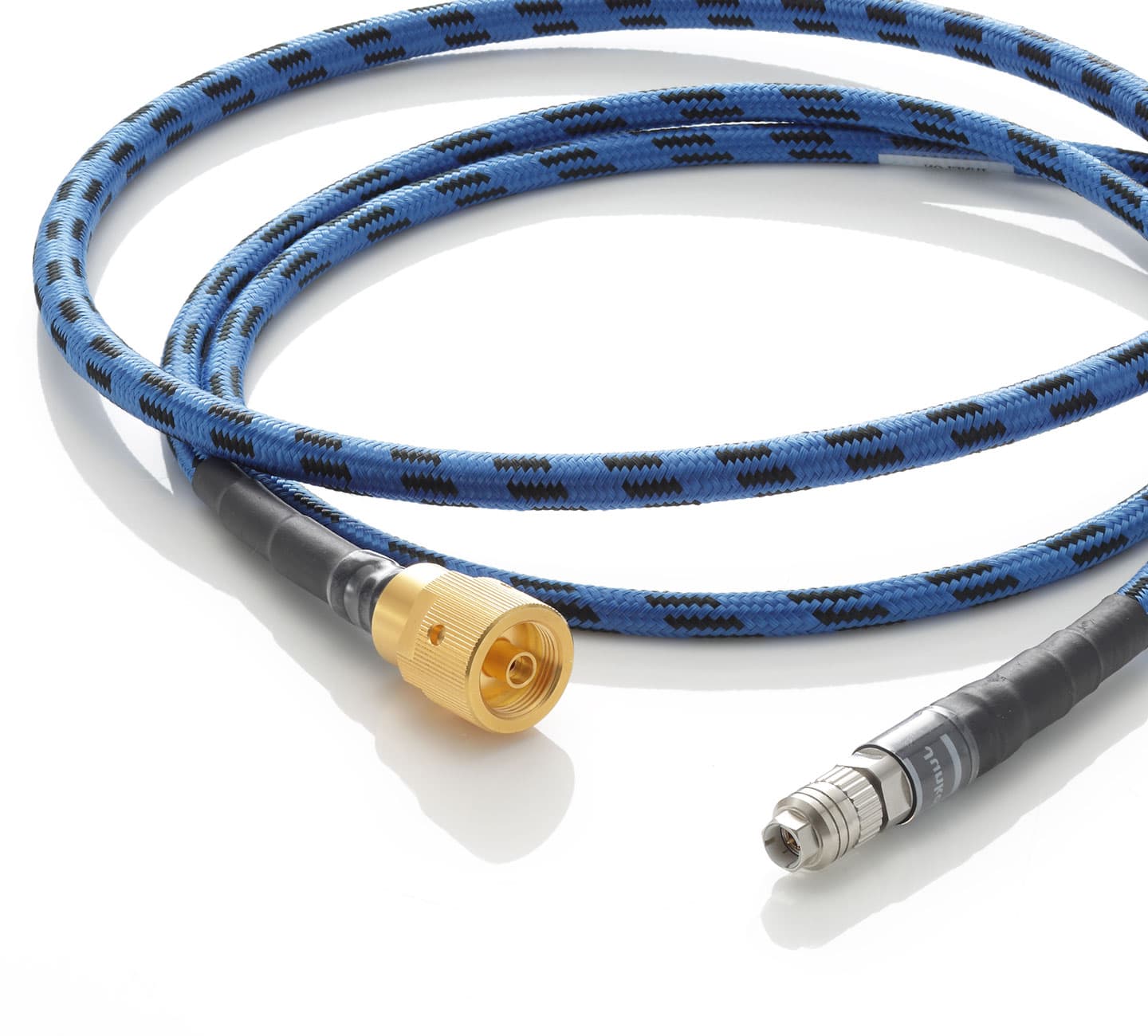
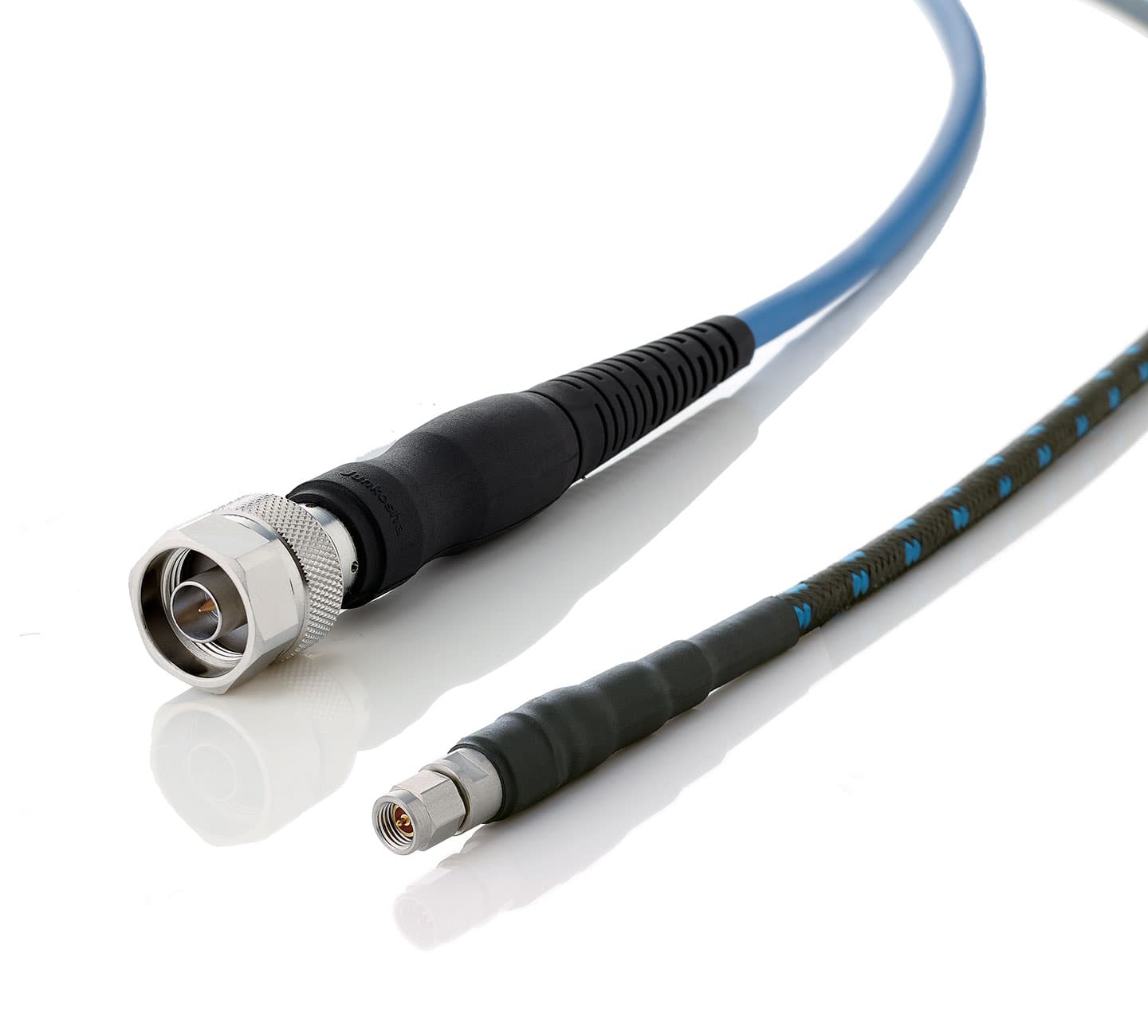
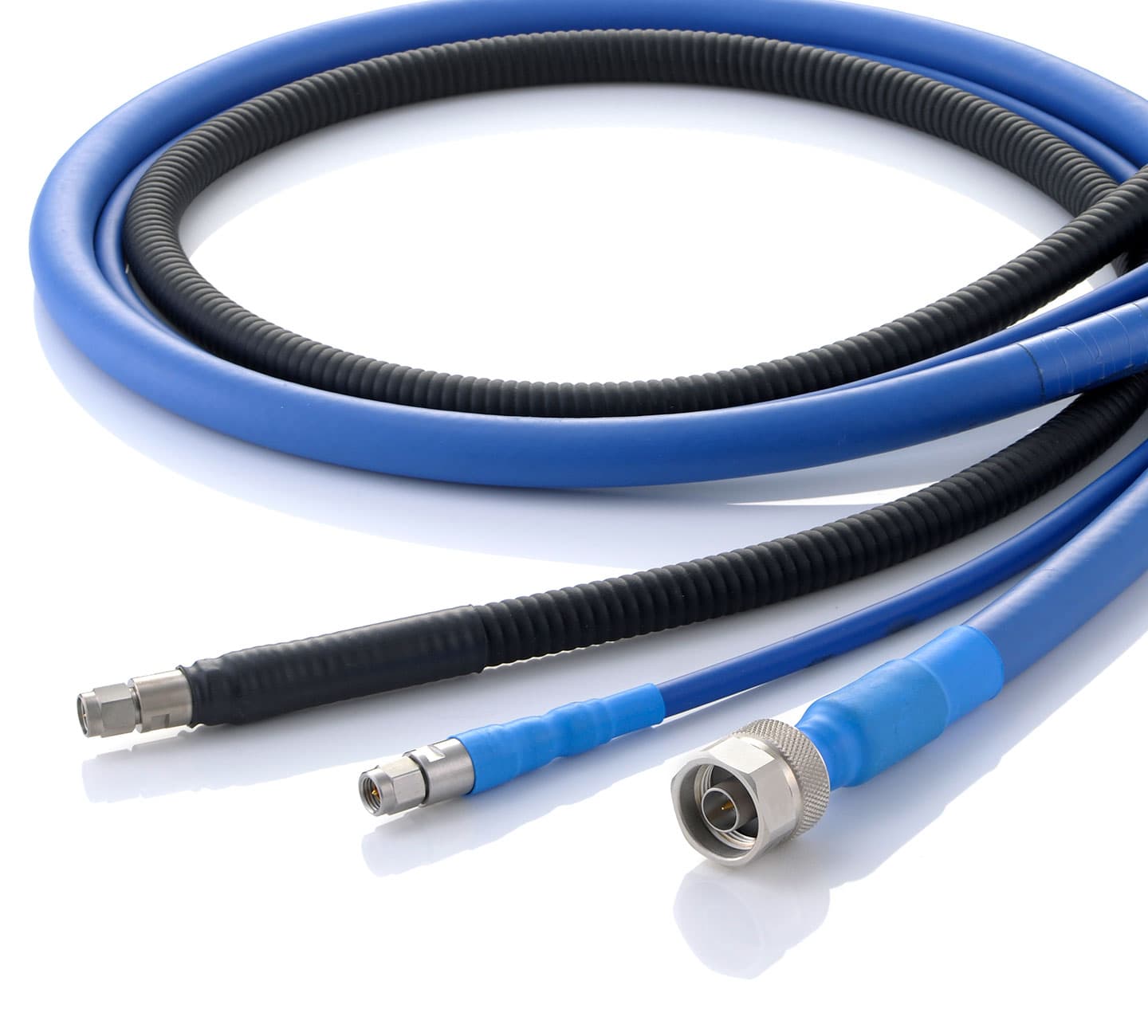
The Full MWX Series
RF and microwave cable assemblies for every test and measurement application.
Stop fighting semi-rigid.
Start routing clean — with your bare hands.
The MWX4 & 5 Series is available in Israel through Koto Electronics — your authorized local source for Junkosha formable cable assemblies. Six variants, better loss than semi-rigid, from 18 GHz to 100 GHz. Get a quote today.