
מהם כבלי RF יציבי פאזה?
כבל RF יציב פאזה הוא כבל השומר על אורך חשמלי עקבי — ולכן עיכוב פאזה עקבי — כאשר הכבל מתכופף, ממוקם מחדש או נחשף לשינויי טמפרטורה. ברוב יישומי שידור אות, סטיות פאזה קטנות אינן רלוונטיות. אך במדידה מדויקת ומערכות RF קוהרנטיות, חוסר יציבות פאזה הוא מקור שגיאה שלא ניתן לכייל אותו.
מדוע יציבות פאזה חשובה
במדידות מנתח רשת וקטורי (VNA), מישור הייחוס נקבע על ידי הכיול. כל שינוי באורך החשמלי של הכבל לאחר הכיול — ממיקום מחדש של הכבל, החלפת תבנית הבדיקה, או שינוי בטמפרטורת הסביבה — מזיז את מישור הייחוס ומכניס שגיאת פאזה בכל מדידה עוקבת. שגיאה זו אינה ניתנת להבחנה מתגובת הפאזה האמיתית של הרכיב הנבדק. במערכות מכ"ם מערך פאזי ולוויין, התאמת פאזה בין קווי הזנת אנטנות קובעת את דיוק כיוון הקרן. חוסר התאמת פאזה של מעלה אחת על פני מערך של 64 אלמנטים מכניס שגיאת היגוי קרן. עבור יישומים אלה, יציבות פאזה אינה מפרט אופציונלי — היא דרישת מערכת.
מה גורם לסטיית פאזה בכבלים
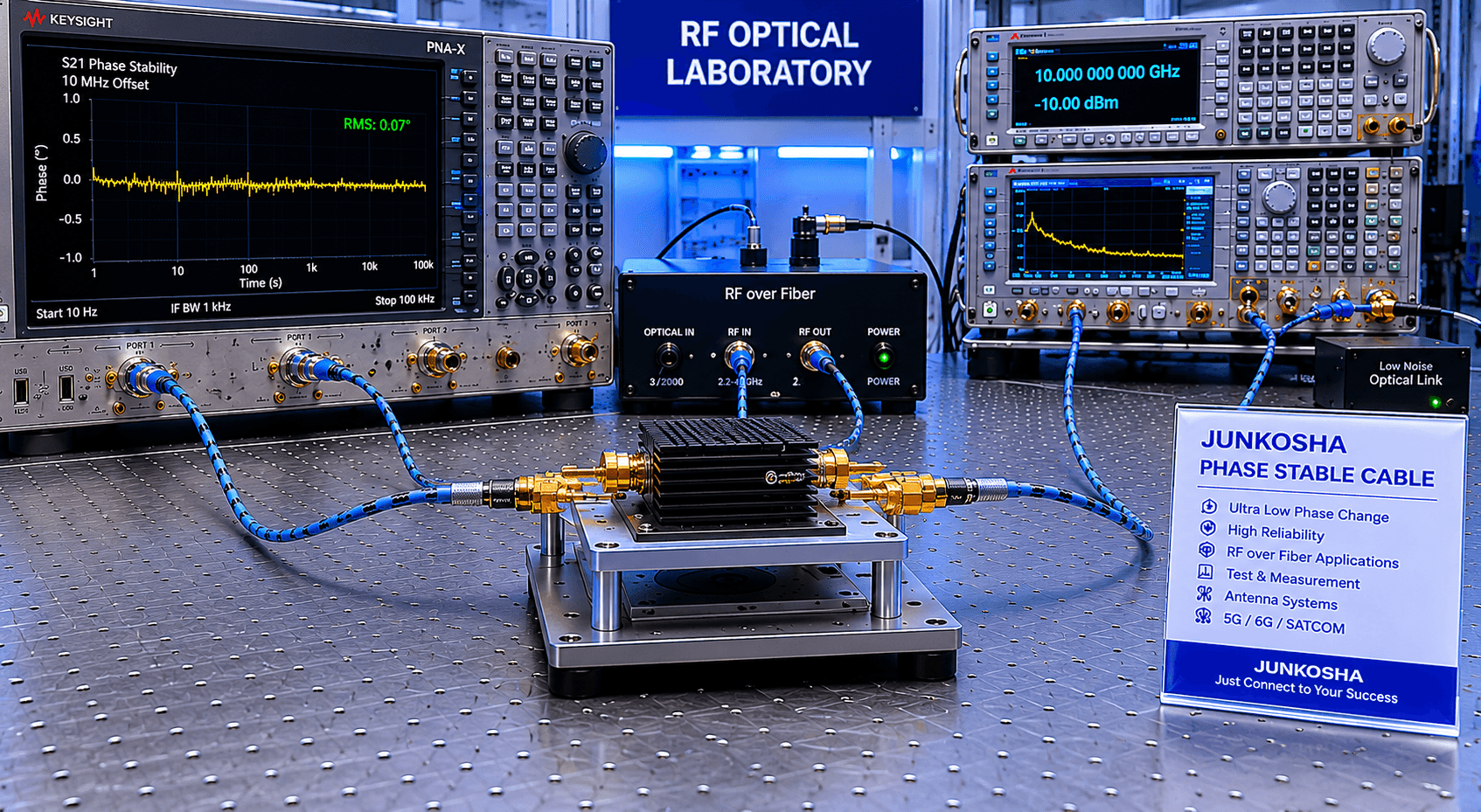
סטיית פאזה בכבלי RF נובעת משינויים באורך החשמלי של הכבל — מכפלת האורך הפיזי ומהירות ההתפשטות. שלושה מנגנונים מניעים חוסר יציבות פאזה: דחיסת דיאלקטריק בכיפוף הכבל משנה את המוחות היחסית של החומר הדיאלקטרי; תזוזת מוליך ביחס למגן משנה את גיאומטריית קו השידור; ומתיחה תרמית של הדיאלקטריק משנה את האורך הפיזי עם שינוי הטמפרטורה. בכבלי PTFE דיאלקטרי רגיל, כיפוף מדחס את הדיאלקטריק הצבוע ישירות כנגד המוליך המרכזי, וגורם לשינויים מדידים במוחות ובפאזה. האפקט בולט יותר בתדרים גבוהים שבהם אפילו שינויים ממדיים קטנים מייצגים חלקים משמעותיים מאורך הגל.
דיאלקטריק ePTFE: הפתרון ההנדסי
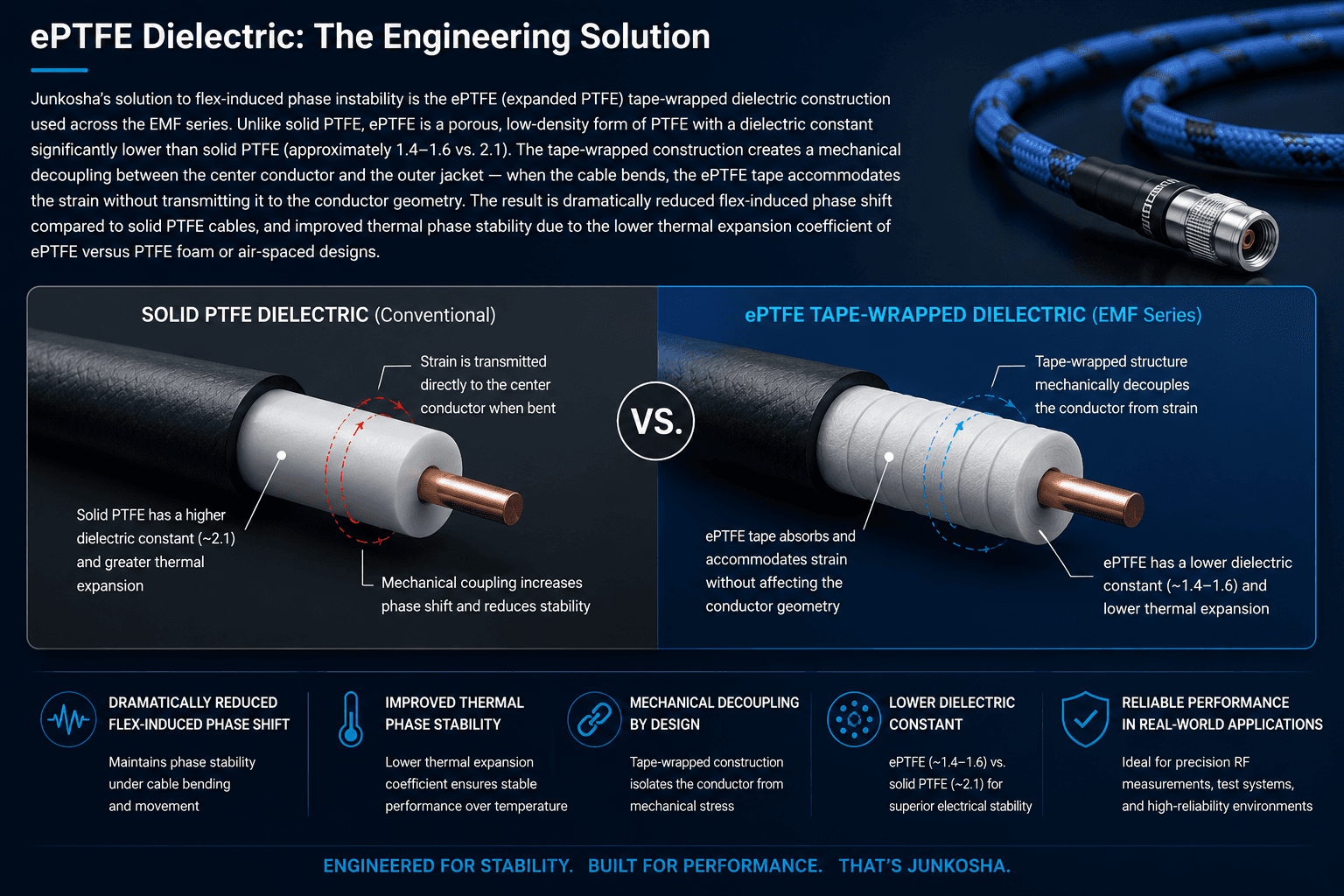
הפתרון של Junkosha לחוסר יציבות פאזה הנגרמת מכיפוף הוא בנייה של דיאלקטריק עטוף סרט ePTFE (PTFE מורחב) המשמשת בכל סדרת MWX. בשונה מ-PTFE מוצק, ePTFE הוא צורה נקבובית בצפיפות נמוכה של PTFE, עם קבוע דיאלקטריק נמוך משמעותית (כ-1.4–1.6 לעומת 2.1). הבנייה העטופה בסרט יוצרת ניתוק מכני בין המוליך המרכזי לבין המעטפת החיצונית — כאשר הכבל מתכופף, סרט ה-ePTFE מכיל את העומס מבלי להעביר אותו לגיאומטריית המוליך. התוצאה היא הפחתה דרמטית בסטיית פאזה הנגרמת מכיפוף בהשוואה לכבלי PTFE מוצק, ושיפור ביציבות פאזה תרמית בשל מקדם ההתמסרות הנמוך של ePTFE.
כיצד מפרטים יציבות פאזה
יציבות פאזה מפורטת בדרך כלל כסטיית פאזה מקסימלית (במעלות) תחת תנאי בדיקה מוגדרים — כגון כיפוף הכבל דרך לולאה של 360 מעלות בקוטר מוגדר, או מחזור טמפרטורה דרך טווח מוגדר. כבל יציב פאזה עם מפרט טוב יפרסם מפרטים נפרדים ליציבות פאזה מכנית (כיפוף) ותרמית. ערכים טיפוסיים לכבלי VNA מדויקים הם 1–5 מעלות שינוי פאזה על פני כיפוף מוגדר בתדר המדורג המקסימלי. יש להתייחס בספקנות לכבלים המשווקים כ"יציבי פאזה" ללא מפרטים מספריים שפורסמו. Keysight ו-Rohde & Schwarz מפרטים סטיית פאזה מקסימלית של כבלי יציאה המשמשים עם מערכות ה-VNA שלהם — סדרת MWX של Junkosha מתוכננת לעמוד בדרישות אלה.
זוגות כבלים עם התאמת פאזה
ליישומי אות דיפרנציאלי — כניסות מדידה מאוזנות, מכ"ם דו-יציאתי קוהרנטי, מערכות הזנת אנטנות MIMO — התאמת פאזה בין זוג כבלים חשובה לא פחות מיציבות פאזה מוחלטת. זוג עם התאמת פאזה מפרט את ההבדל המקסימלי באורך חשמלי בין שני מכלולים בתדר נתון. MWX6 של Junkosha מתוכנן במיוחד להתאמת סטייה, עם זוגות מותאמים בדל-פיקו-שניות בתדרים של עד 120 GHz. זוגות עם התאמת פאזה מוזמנים כסטים; החלפה בשטח של כבל אחד בכבל לא-מותאם תפגע בביצועי הדיפרנציאל. בהזמנת זוגות מותאמים, ציינו את סבילות הסטייה הנדרשת ותדר המדידה.
כבלי Junkosha יציבי פאזה
סדרת MWX של Junkosha מספקת אפשרויות יציבות פאזה בכל טווח תדרי המיקרוגל וגל-המילימטר. MWX0 הוא כבל המדויק המוביל לעבודת מטרולוגיה 26.5–145 GHz, המשמש מעבדות כיול ויצרני VNA למדידות ייחוס. MWX3 מותאם ליישומים קוהרנטיים כולל בדיקת מכ"ם ולוויין. MWX7 הוא הכבל יציב הפאזה לשימוש כללי לבדיקות 5G ויישומי כניסת VNA, המאזן יציבות פאזה עם עמידות כיפוף לסביבות ייצור. כל כבלי סדרת MWX זמינים דרך קוטו אלקטרוניקה בישראל.